
What to Do When Social Media Stops Working
Lately, I’ve been hearing from a lot of creatives who feel discouraged by social media. Authors, artists, and small business owners have shared that they’re posting consistently, trying new ideas, following trends, and still seeing lower reach and engagement than they used to.
If that’s where you are right now, I want you to know that you’re not imagining it. Social media has changed quite a bit over the last few years, and the way people interact with content is changing alongside it.
That doesn’t mean your work has lost value or that your marketing has stopped working entirely. It usually means your strategy needs to evolve with the platforms instead of staying tied to what worked a few years ago.
If you want a deeper breakdown of how I’m approaching social media right now, you can watch the full video or listen to the podcast linked below.
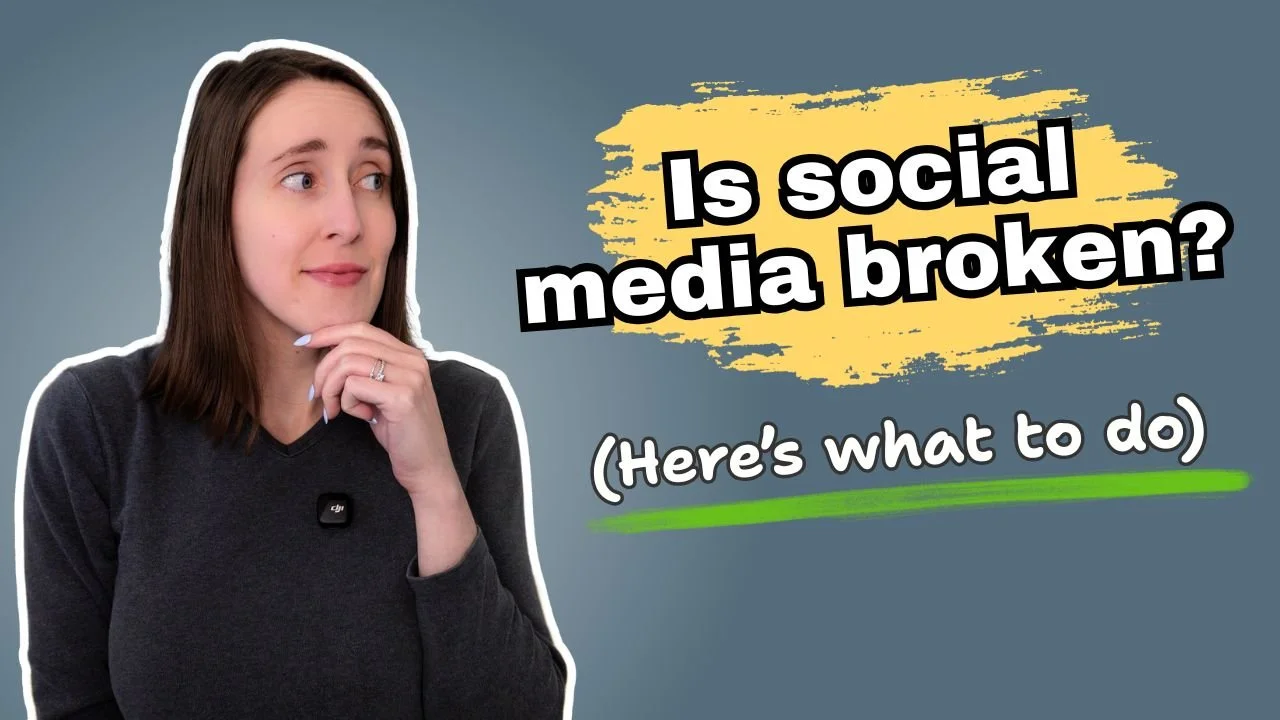
Prefer to watch or listen rather than read this article?
Why Social Media Feels Harder Right Now
One of the biggest shifts is simply the amount of content being published every day. AI tools and faster content creation systems have made it easier for people to post at a higher volume, which means audiences are seeing more content than ever before.
At the same time, platforms are continuing to prioritize paid advertising and sponsored content. Organic reach still exists, and creators are absolutely still growing organically, but the environment is more competitive than it used to be.
I think this is why so many creatives feel exhausted. The instinct when reach drops is usually to work harder: create more content, spend more time editing, follow more trends, or try to perfect every post. I understand that instinct completely, but I’ve found that posting more isn’t always the thing that improves results.
Usually, the better approach is stepping back and looking at what kind of engagement your content is actually creating.
Engagement Has Become the Priority Signal
One of the most important shifts in social media right now is how engagement is measured. Shares and saves are carrying significantly more weight than likes. In practical terms, this means platforms are paying more attention to whether people are sending your content to someone else or saving it for later.
That changes the goal of content creation. Instead of focusing only on reach or likes, the focus moves toward:
content people want to share with someone specific
content that feels personally relevant
content that invites interaction
This is where growth is currently happening.
Creating Content People Actually Send to Others
The most effective posts right now tend to feel specific and relational. They give someone a reason to send it to a friend or partner because it reflects something personal or recognizable.
Some formats that tend to support this:
content tied to identity markers like birth months or personality types
“this or that” comparisons
“choose two” style prompts
fill-in-the-blank statements
interactive captions that invite participation
The key isn’t copying formats exactly but adapting them so they fit your audience specifically.
When content reflects your audience clearly, people naturally share it because it becomes a way of communicating with others.
Why Owned Platforms Matter More Than Ever
I still believe social media is incredibly important for creatives. It helps people discover your work, learn about your business, and build familiarity with you over time.
At the same time, I think it’s important to build spaces you fully own alongside social media. Platforms change constantly. Algorithms shift. Accounts can lose reach unexpectedly. That’s why having a direct connection with your audience matters so much.
For me, email marketing continues to be one of the strongest tools for this. When someone joins your email list, they’re choosing to hear from you directly. You’re no longer relying entirely on a platform to decide whether your content gets shown. Even modest email open rates can often create more consistent visibility than social posts. Email also gives you room to build a deeper relationship with your audience over time. You can share updates, stories, launches, and recommendations in a space that feels more personal and focused.
If you’ve been putting off starting an email list, I really do think this is a good time to prioritize it.
Long-Form Content Builds Trust Over Time
Platforms like YouTube and podcasting operate differently from short-form social media. They are slower, but they build deeper trust. Long-form content works particularly well for:
educators and coaches
authors and non-fiction writers
service providers with higher-ticket offerings
anyone building authority over time
The value comes from attention duration. People spend more time with you, which naturally builds familiarity and trust. Not every creative needs long-form content, but for many, it becomes a strong foundation layer.
Private Communities Are Becoming More Important
There’s also a growing shift toward private or semi-private communities. People are increasingly looking for spaces where they can:
connect more directly
share experiences with others
feel part of a smaller group
This can be a paid membership, a free group, or a structured community space. The value isn’t necessarily constant content production. It's a connection. People sharing wins, challenges, ideas, and experiences in a contained environment. That sense of belonging is becoming more important in digital spaces.
Building a More Stable Marketing System
Right now, I think the strongest approach is combining multiple layers together instead of relying entirely on one platform.
Social media can introduce new people to your work.
Email can help you maintain a direct connection.
Long-form content can deepen trust over time.
Community spaces can strengthen engagement and loyalty.
When these pieces work together, algorithm changes feel much less overwhelming because your business isn’t depending on a single source of visibility. Over the years, I’ve experienced many shifts in social media reach and engagement. I’ve had posts perform incredibly well, and I’ve had posts reach very few people. Through all of those changes, the thing that has helped most is staying adaptable instead of assuming the strategy has to stay exactly the same forever.
If you need a system, check out the Social Media Suite: a year of content for authors and artists.
Final Takeaway
There is a large amount of content online right now, and audiences are becoming more selective about what they engage with and share. The content that continues to stand out usually feels personal, specific, and connected to the person creating it. Your experiences, perspective, stories, and voice matter more now, not less.
I would encourage you to continue showing up, continue experimenting, and continue building spaces where your audience can connect with you more directly. Social media still has value. It simply works best when it’s part of a larger ecosystem that supports your creative business long-term.
Thank you for taking the time to read this. I hope these ideas help you approach social media with a little more clarity and a little less pressure. Marketing will continue to change, and platforms will continue to evolve, but your ability to connect with people through your work still matters deeply.